Upgrade Licenses
When you purchase an upgrade to a software product (e.g., upgrading from Microsoft Office 2019 to Microsoft Office 2021), the license records in xAssets must be updated to reflect the change. This page explains the correct process for recording upgrades so that licensing reports remain accurate.
How Upgrades Work in xAssets
An upgrade involves three actions:
- Create a new license record for the upgraded product
- Split the original license if only some seats are being upgraded
- Mark the upgraded portion as "Upgraded and Out of Service" so it no longer counts toward entitlement
This ensures that:
- The old license seats are not double-counted
- The new license is properly tracked
- The audit trail is preserved
Example: Upgrading 10 of 35 Microsoft Office Licenses
In this scenario, you have "Microsoft Office Pro Plus 2010 — 35 Seats" and are purchasing 10 "Microsoft Office Pro Plus 2016" upgrade licenses.
Step 1: Create the New Upgrade License
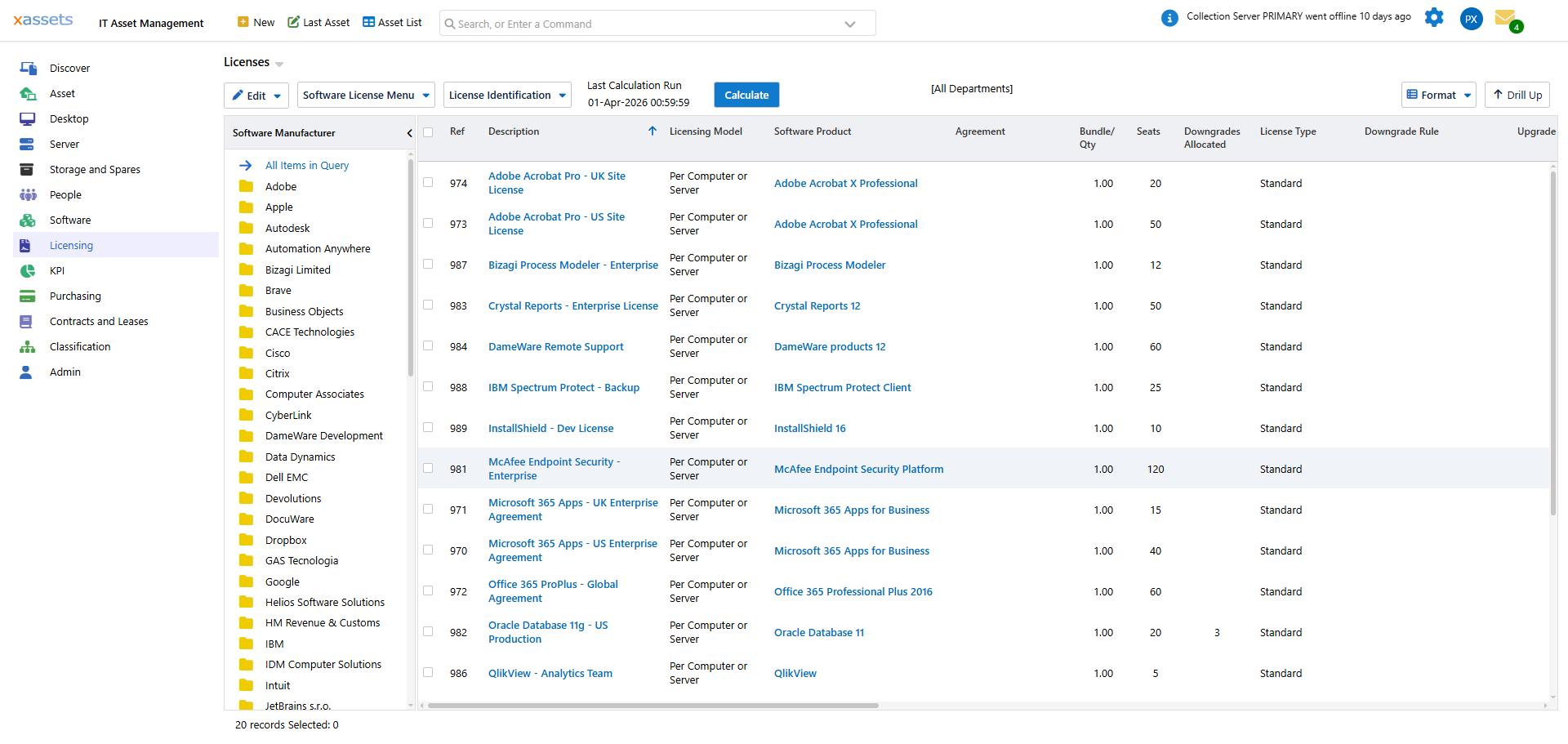
- Navigate to Licensing → Licenses
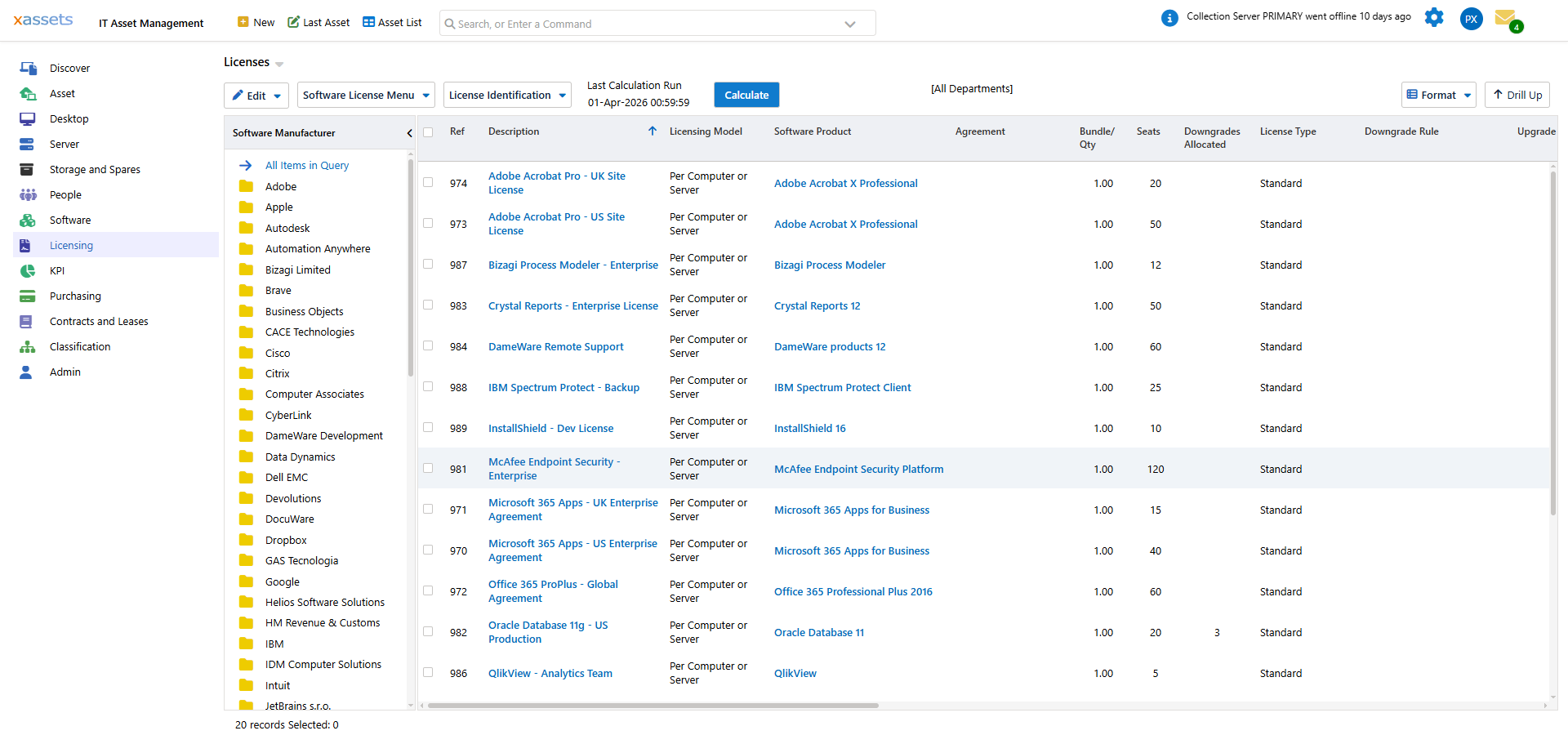
- Create a new software license record for "Microsoft Office Pro Plus 2016 — 10 Seats"
- Enter the purchase details, seats, and software product
Step 2: Clone and Split the Original License
Since only 10 of the 35 original seats are being upgraded, you need to split the original license into two records:
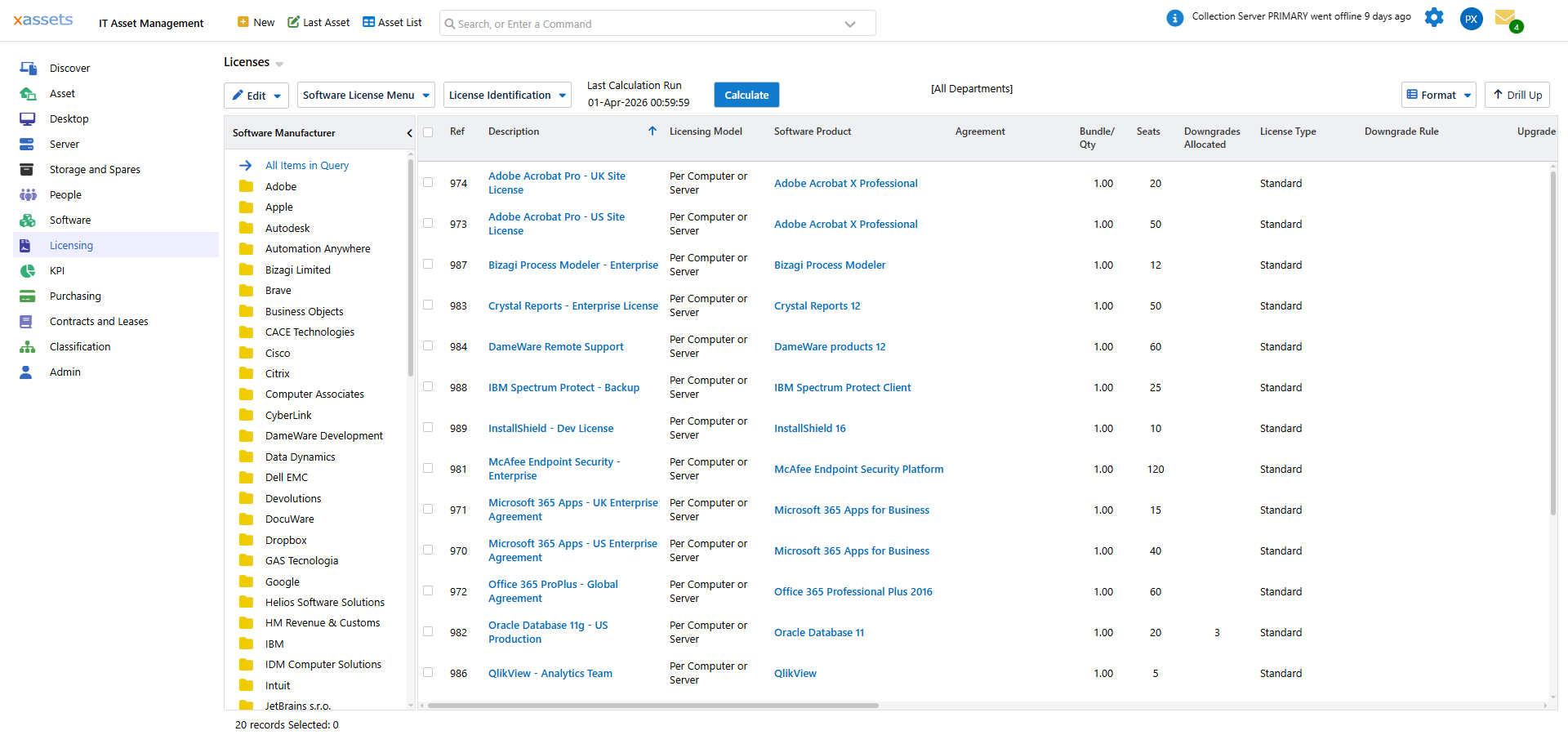
- Open the original "Microsoft Office Pro Plus 2010 — 35 Seats" asset
- Click the Clone button at the bottom of the editor (or use Actions for this Asset)
- In the Clone Asset dialog leave Clone this Asset on Clone as a new Asset and click OK
Tip: The Split button next to Clone does the seat arithmetic for you: it moves a number of seats you specify out of the original record into a new one in a single step. See Splitting Assets. The clone route is shown here because it also works when the upgraded part needs different purchase details.
Step 3: Mark the Upgraded Clone
- Edit the cloned record:
- Change the Description to indicate it was upgraded (e.g., "Microsoft Office Pro Plus 2010 — 10 Seats (Upgraded to 2016)")
- Set the Seats to 10
- Set the Status to "Upgraded and Out of Service"
- Save the record
Step 4: Adjust the Original License
- Edit the original license record
- Change the seats from 35 to 25 (the remaining non-upgraded seats)
- Save the record
Step 5: Recalculate
After saving, you will receive a prompt with an option to recalculate the Licensing Position. It is recommended that you recalculate after changing licenses to keep compliance data current.
After the Upgrade
You should now have three license records:
| Record | Seats | Status | Purpose |
|---|---|---|---|
| Microsoft Office Pro Plus 2010 — 25 Seats | 25 | In Service | Remaining original licenses |
| Microsoft Office Pro Plus 2010 — 10 Seats (Upgraded) | 10 | Upgraded and Out of Service | Audit trail for the upgraded seats |
| Microsoft Office Pro Plus 2016 — 10 Seats | 10 | In Service | New upgrade licenses |
Tips
- Always clone and split rather than simply reducing the seat count on the original — this preserves the full history
- If any computers were assigned to the old license, reassign them to the new license after the upgrade
- The "Upgraded and Out of Service" status ensures the old seats do not count toward entitlement in compliance reports
- For full upgrades (all seats), you do not need to clone — just change the original license status to "Upgraded and Out of Service" and create the new license
What the Engine Does With Upgrade Licenses
In the simplified upgrade architecture, an upgrade license works like any other license — it grants to consumptions for its named product (e.g., the new VS 2022 license grants to VS 2022 consumptions). The "upgrade" classification is documentary: it tells humans where this license came from in the audit trail.
If you also want the upgrade license to cover the older version (e.g., the new VS 2022 license should also cover any remaining VS 2019 installs), set the Downgrade Rule on the new license to One or Any. See Downgrade Rights and Concepts: Downgrade Rules.
Related Reading
- Downgrade Rights — letting an upgrade license cover the older version
- License Status Codes
- Concepts: Downgrade Rules — engine behavior for downgrade allocations